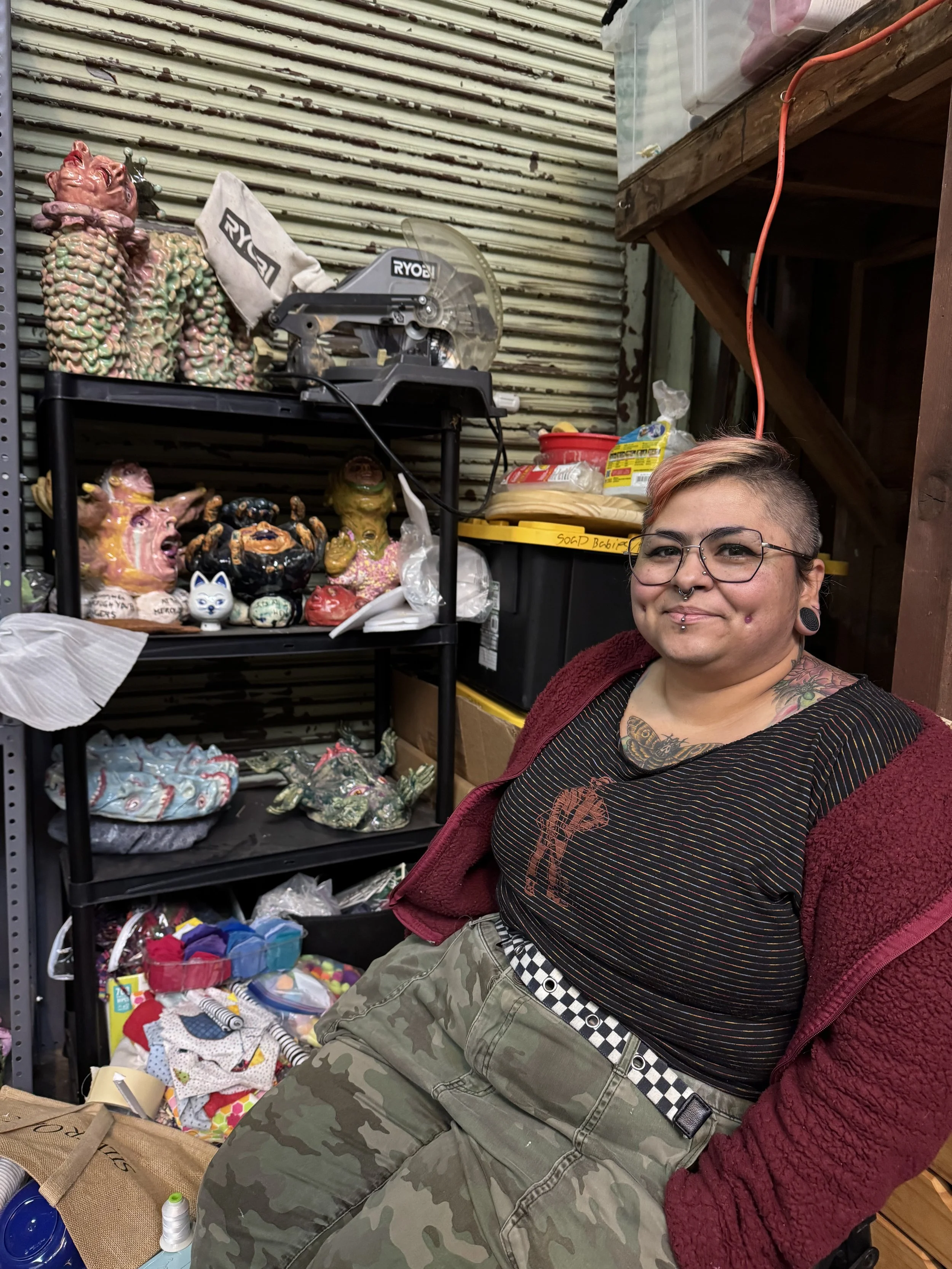
Interview with Cynthia Yarida Gonzalez for their first upcoming solo exhibition
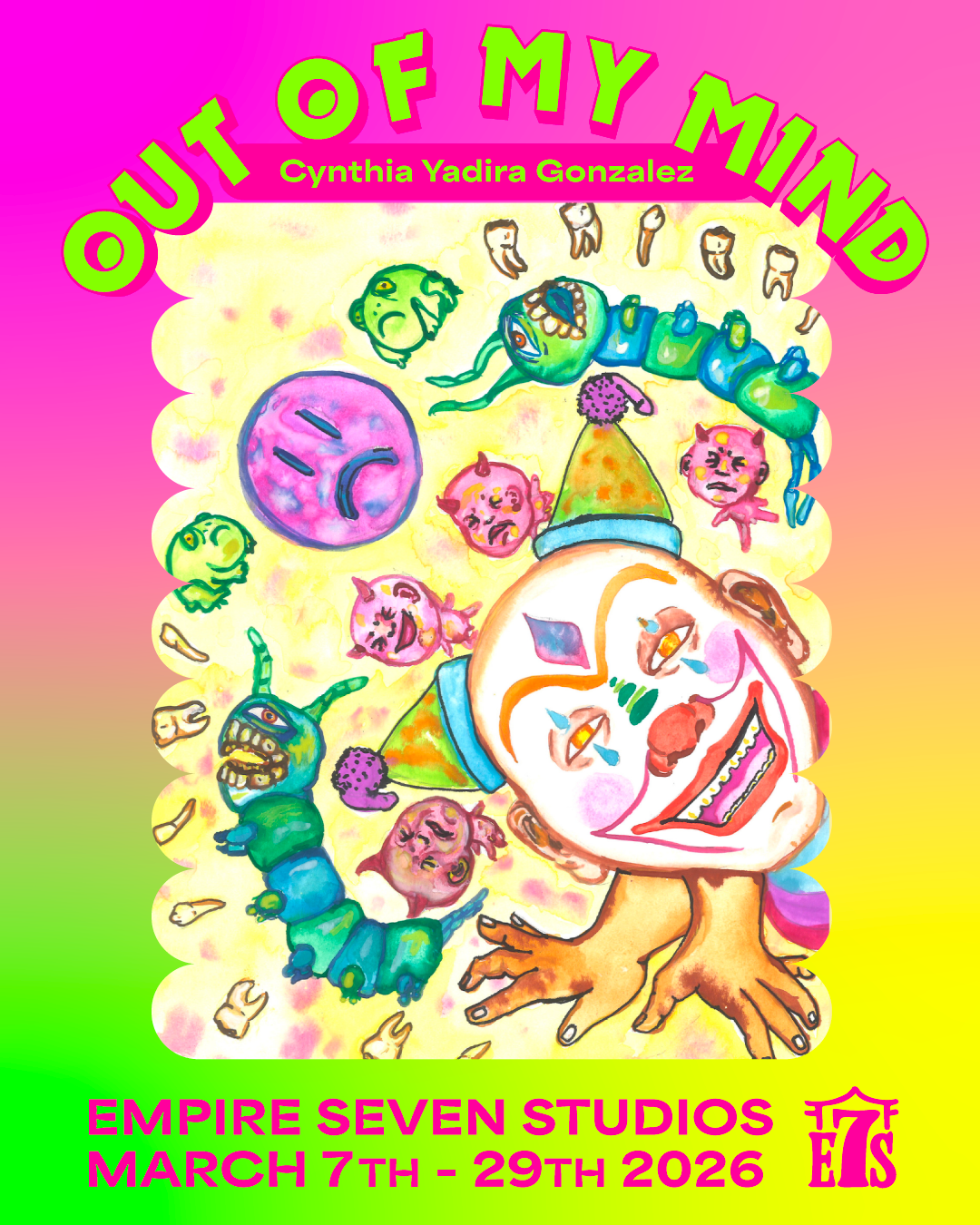
“Out of My Mind” Opening March 7th 6-9pm at Empire Seven Studios.
Getting to know artists through conversation more or less of an interview has been a breath of fresh air, and we hope that it gives readers a sense of being at the table with us. There’s the editorial responsibility of polishing up our randomness for reading purposes, but the conversations are fully intact.
Relatability, connections, traumas, and nostalgia growing up in Mexican, Spanish speaking households. Cliches that have been popularized through Hollywood or memes on socials, that have become cultural revolutions, normalizing our culture and giving us a step up into modern times. Our conversation taps into several aspects of upbringings that inspire determination, resilience to never give up or let anyone interfere with our dreams.
Cynthia's work ethic explains the massive production of artworks, and resembles a struggle to succeed considering any challenges life brings. There’s no shortage of mediums to be explored in every corner of their studio. The work is punk, comforting, with a playfulness that makes you think why does this feel so familiar. Getting to know each other more and understanding that our households and upbringing had such similarities was not only heartwarming but important to understand where we land in all this in terms of pursuing arts as a career with the pressures of getting a real job.
It’s a fire burning inside of us that will cook up all types of good shit. Unknowingly we all struggle from feeling like we don’t belong within our own communities, and creating things under the same influences for better or worse. If you’ve been to artisan markets and enjoyed the pleasures of picking up items and collecting them because they will remind you of these special moments, and on top of that having a piece of someone's soul is a great reminder of what is humanistic and makes life joyful.
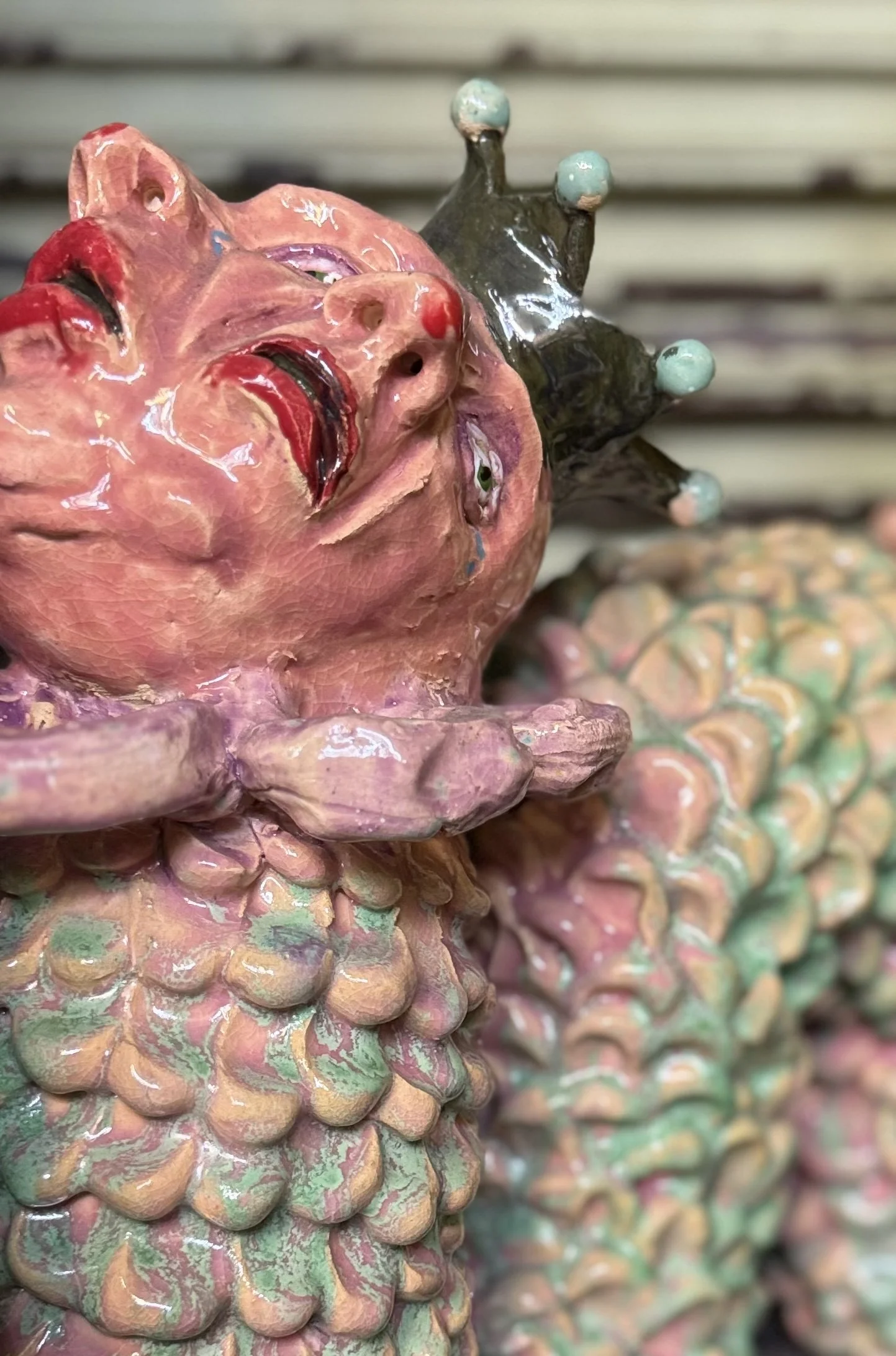
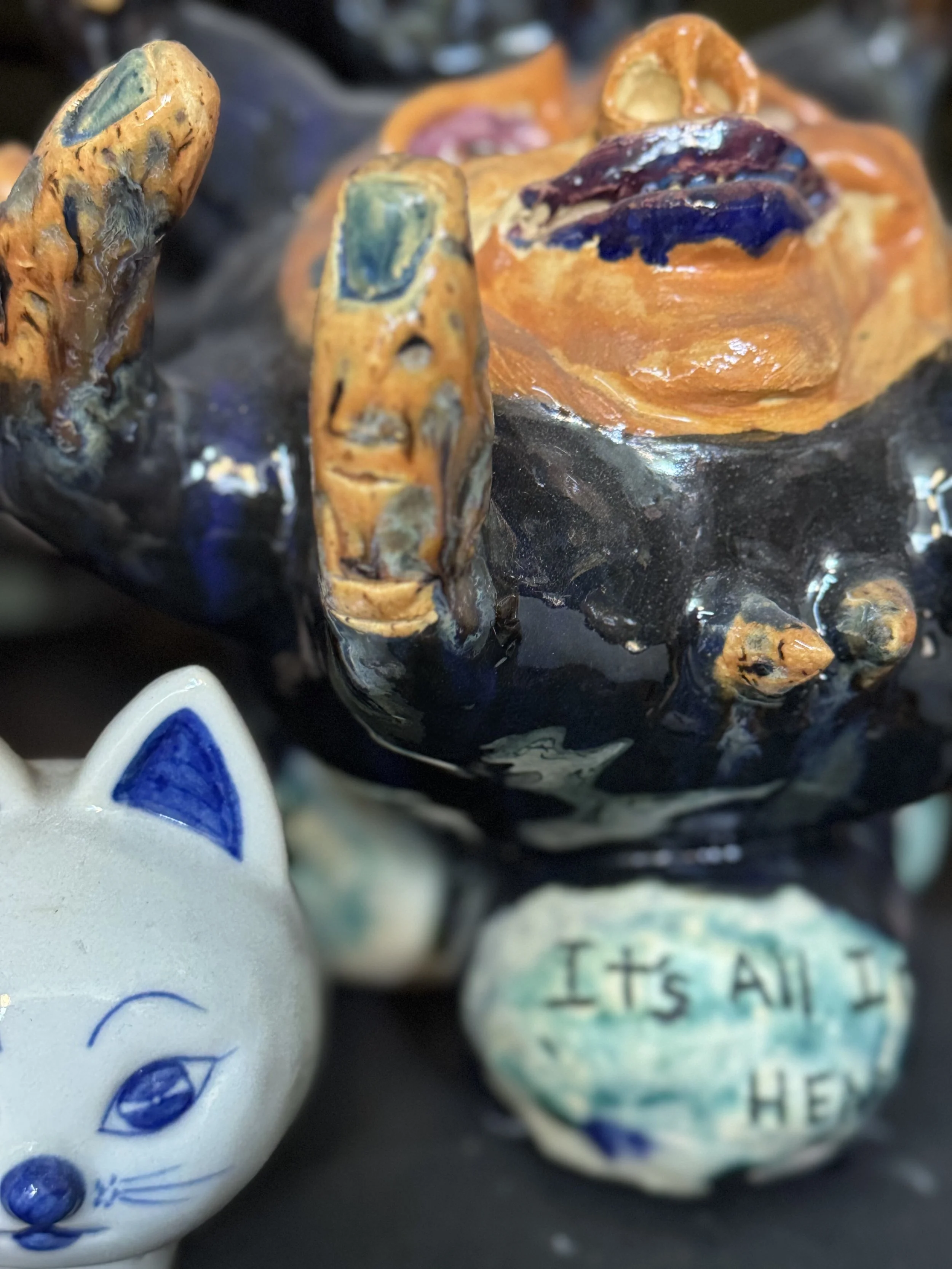
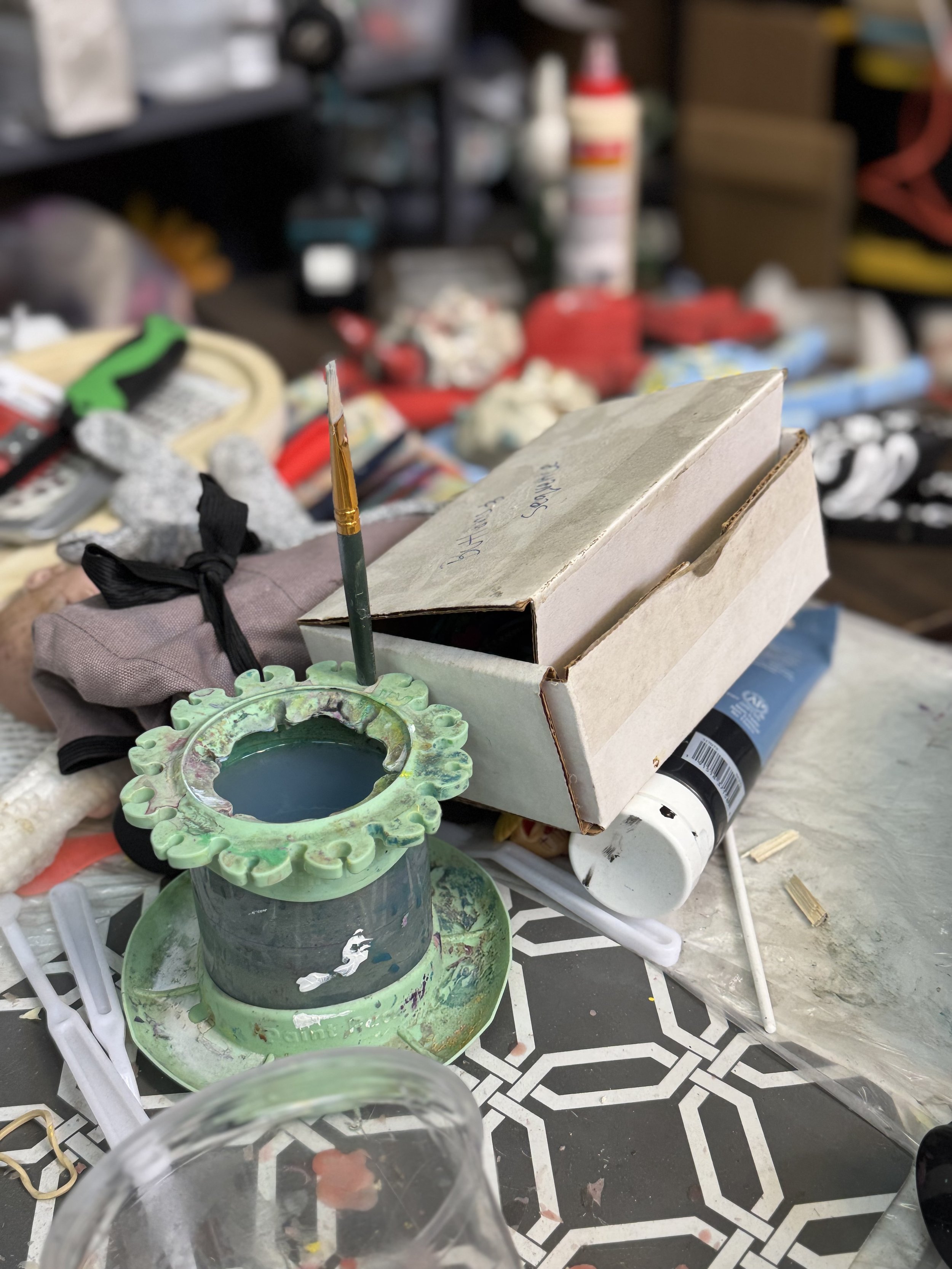
Cynthia’s studio is a monument for wild imaginations, one that will soon be displayed on gallery walls, and get into the art world beyond. Textiles, ceramics, candle wax molds, paintings, are amongst a clutter of works in progress. The expressions of Cynthia's artworks, whether it’s a self portrait or a baby crying, it's a radical way to say this is me, and proud. Not wearing a cliche but making a bold statement that we as a people have a vast amount of things to say through our creative voice.
JC: Let's just start off with introducing yourself what type of work you create and
go from there.
CG: Hi, I'm Cynthia Yadira Gonzalez.
I am a crafter, a sculptor, a painter and all around mess. I have my MFA in sculpture, so I do a lot of ceramics and 3D work, but then at home, I also do a lot of paintings.
JC: We're in Cynthia's Studio right now and it's filled with work. It seems like you're working all the time from what I see, right? But that's obviously the perception of social media. If you can share how often you are in your studio making work? What is your process?
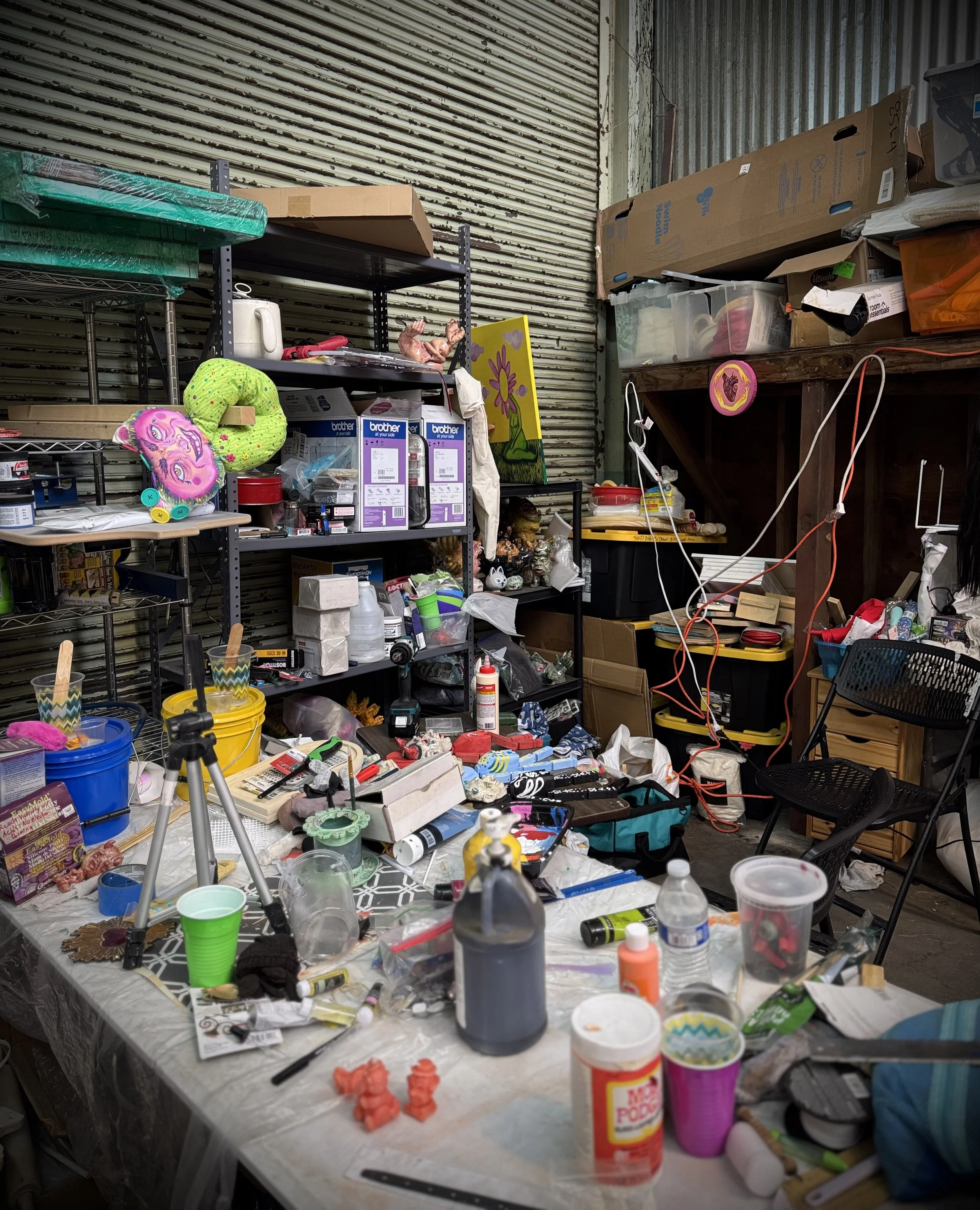
CG: Yeah, so right now, I am an adjunct professor at Gavilán College in Gilroy and at San Jose State because I'm mostly there teaching ceramics.
I start a lot of projects as demos and then complete them and make them my own and a body of work usually comes from the projects that I assign. I just graduated in 2024, that's two years ago.
When I was in school, I was very driven to make bodies of work and then after completing a body of work, I would display them at school. I had really strong work ethic.
Once I graduated, it didn't really go away.
It did slow down a little bit, mostly because I didn't have a place to display the work. I have like two storages full of work that I'm just sitting on. But that doesn't stop me from making new work.
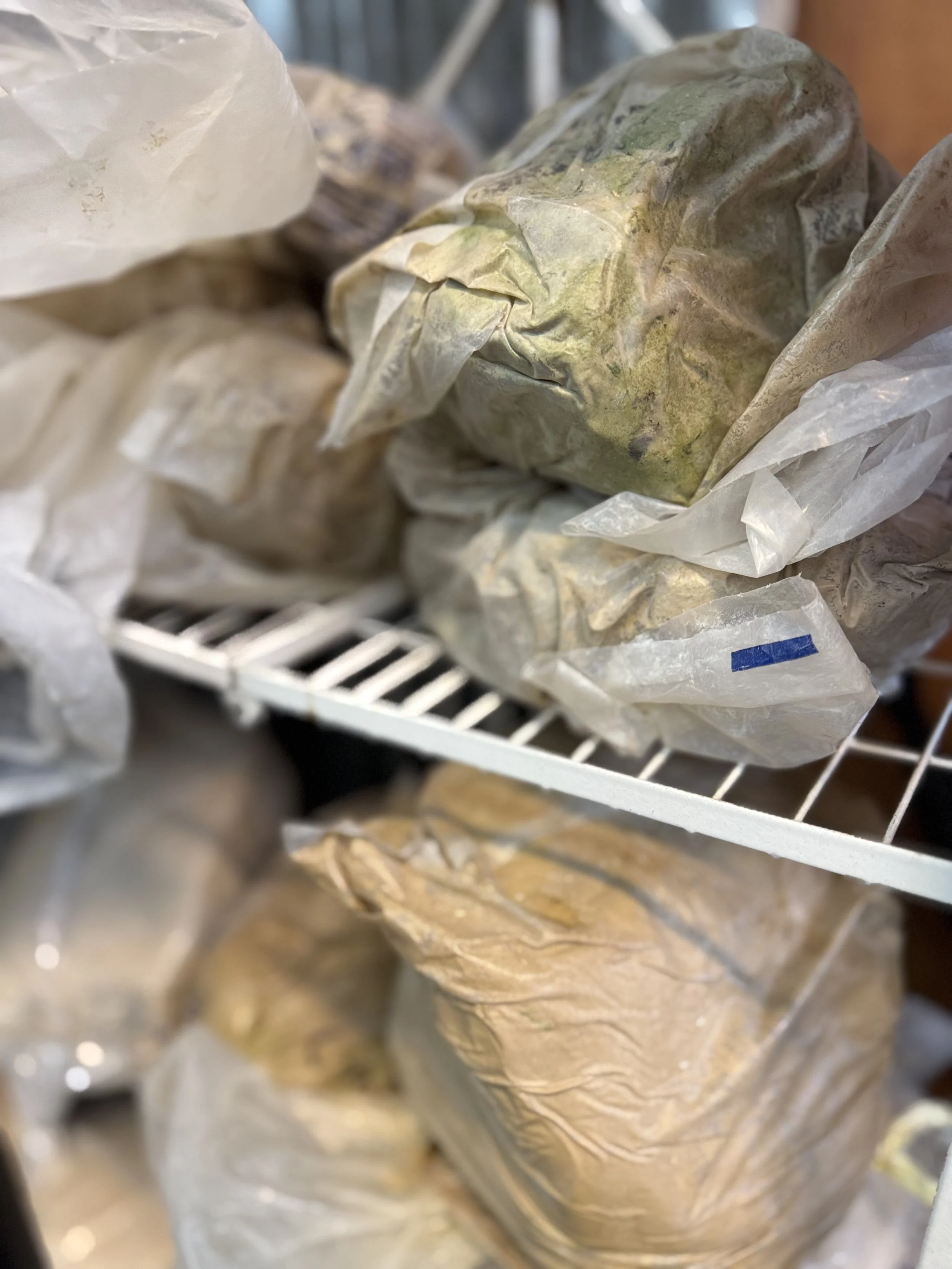
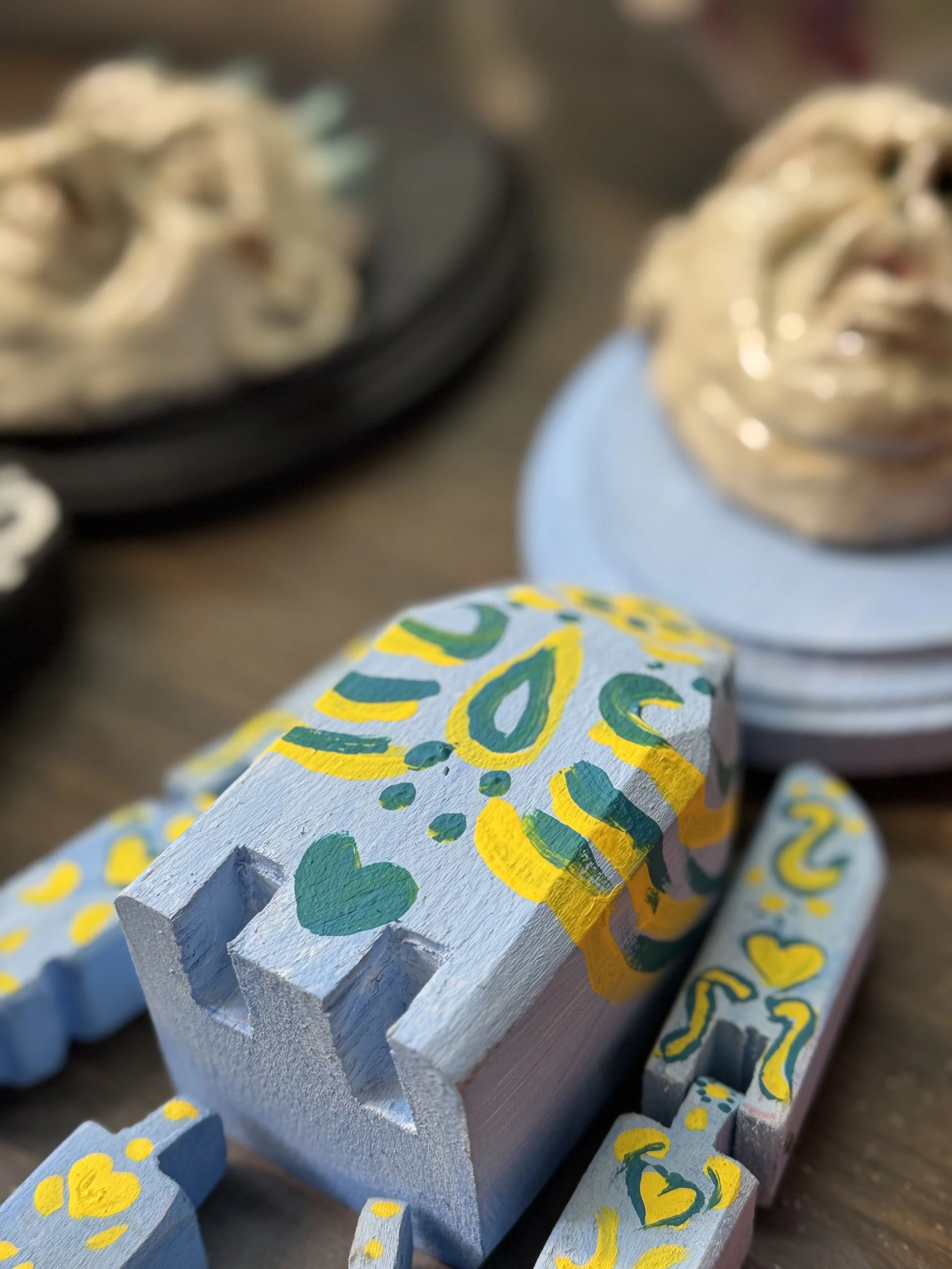
I do start my ceramic works, fire them and glaze mostly at the jobs I have. In my studio practice, I like to mess around with other things like mold making. I've been messing with candle wax at home. I suffer from anxiety.
So like, you know, idle hands are the Devil’s playwork or playground.
I'm constantly questioning how to run away from my anxiety. I'm making rugs like the old-fashioned way.
If you were alive in the 70s and 80s, it's a hook rug, which is one knot at a time on a grid. When I want a break from that, I'll do watercolors or I'll explore acrylics. There's this constant need of we'll, if you're not doing nothing or if you're bored, you need to go do something, which is something that a lot of Latinos grew up with, you're like, oh, you're bored, go clean.
And I don't want to go clean. I'd rather make a mess.
(laugh intermission)
JC: I see. Well, there’s a lot of interesting factors here. Something that sticks out is your hard work ethic.
And I think that's the part that I really admire and acknowledge quite a bit. You're working so much, and at one point, scared me when I saw you were getting ready to throw some frog sculptures out because you needed to make room and I was just like, oh no, please don't do that, you know? That's what really sparked our collaborations and we’re able to bring a lot more of your work and introduce it to collectors at the gallery.
In terms of your hard work ethic, like I'd love for you to share more and you also identify as Latina.
CG:Yeah.
JC: Okay, can you tell me a little bit about your upbringing? I'm a first generation Mexican, and I'm always curious, especially when I talk to other Mexican kids who are doing art. I guess Latino kids, right? I was just doing an interview with another artist who’s first generation Vietnamese American. There's a lot of similarities in terms of our parents. Expressions or rants such as “lla para con esto” for context meaning, leave that already and do something valuable with your life. How's it been as a Latina breaking out and pursuing art as a career?
CG: It's been an uphill battle in many ways. Because of circumstances, and upbringing, there have been points in my life where I struggled and questioned if I could even do this.
There is a lot of pushback from the community that asks how? Mostly my parents, not my family. My parents are always asking how are you going to make money with this? How are you going to take care of yourself?
How are you going to take care of your kid? Like, this is kind of like a fool's errand type of thing.
My parents both came to the states when I was around four or five, and they worked the fields. They were janitors. They worked whatever they could. My dad at one point, because he had five kids, had three jobs, and my mom raised all of us and that's a constant job. Knowing or being embedded in this work ethic where if I want to make things happen, I have to do a lot of work, and still trying to figure out what work I need to do.
When I was putting myself through school, I was working three part-time jobs.
Even now, I'm still working three part-time jobs and trying to make artwork. I'd like to shove artwork wherever I can. I'm very lucky that the path I've chosen has led me to have careers in art, it makes it a little bit easier.
It's still a struggle because you need to know how to network, know circles, and certain people to get out there. As an awkwardly social person questioning, how do I implant myself into these situations and communities?
JC: I’m sure hearing this could be so encouraging and relatable to many. San Jose, continues being under the shadows of the big markets of the North Bay. Big Brother & Sister, SF, Oakland, and Los Angeles. I continue to observe how the markets really thrive there, even though everyone's going through a lot of challenges at the moment with where the market is in terms of art sales. I’m predicting and manifesting that you’ll eventually tap into those big markets and it's important to share and hear about where you're right now navigating and working towards getting through those networking obstacles. You've had shows at school, and I know that you've been part of several group exhibitions.
Have you done an entire solo show for yourself at a gallery?
CG: No.
JC: Oh, no. Interesting. This is a first solo show!
CG: Yeah.
JC: Well, that makes this event even more exciting! So much of what you mentioned, really resonates.
My mom was a single parent of seven, and all the hardships of seeing mom work the canneries created my own traumas, and why it’s difficult to romanticize the Valley of Hearts Delight. Yes, orchards are beautiful, but I can’t help but think of my mom coming home exhausted with her hands worn out along with seeing the desperation and concerns when the picking season was over. Where's the next place that will employ her? How will she find income to sustain the family?
Now you have your master’s, has much changed with how your parents view your career?
School is so important for parents, and seeing that you're building a career as an artist and teaching.
Is having that scholar educator role an accomplishment your parents are proud of? How's that changing for you now or has anything changed at all?
CG: The role that I play for my job has changed a lot, and the amount of work. I'm used to doing caregiving and data entry for odd jobs here and there, whatever fits my schedule so I could still go to school. It was really important for me, especially after I had my son at a pretty young age. I was 19, and had to explain to my son that it’s going to be an uphill battle and there's going to be a lot of people that don’t look like me, but I'm going to try my best to show you it's possible.
It was possible, people, and my family, are very proud. I’m the first person to get my master's in the family. The second to get a bachelors, my youngest sibling got their bachelor's first. There was a lot of tension in the beginning, especially from my dad, who was firm to tell me that I’ll need to work harder in order to get into a better situation before I even think about college since he supported my son and I until the age of 26; finally being able to make enough money to move out and take care of my son.
There were lots of arguments questioning if I was going to make money out of art? Is this even viable as a career? What are you doing with your life if you do get your bachelor's? Or when I decided to go for my masters.
What does that mean? How are you going to pay for it? Are you going to be in debt?
I was very lucky that I got out of school without debt. I paid and figured out how to make school work for me, and that's not everybody's case. My youngest sister, who also has her masters now, is like $200,000 in debt. I came into school with the work ethic and a mindset that helped me sustain the financial situation for school and achieve my goals for a higher learning education.
JC: Finishing school was definitely technical and strategic on your end, and not easy to do. However, you were able to achieve your goals. In terms of your hard work ethic. Does that come from your parents, seeing them work so many jobs? You're also a mom, and have the obvious responsibility to take care of your family one way or another, right?
CG: Yeah.
JC: I'm still processing that I totally forgot you're a mom (laughing) on top of all these accomplishments. It’s remarkable that you’re also a parent. I’m in shock, considering that I’ll soon be a father myself. It's inspiring and gives me hope that I’ll continue being creative.
CG: It's totally possible. I've realized that It helps when you have a community or a partner that is supportive. I was very lucky that I helped raise my younger sisters and son. I was doing all these things and they were growing at the same time. My sisters were in their teens and pitched in and helped with tasks when I was at capacity, which was super great. I was a single parent for most of my kid's life, prioritizing my education and career drive, made me miss out on a lot of things. I got this work ethic from my parents and my grandparents, who did the same thing.
As a child whose parents of multiple generations who were working their butt off, was an example that it is possible. My kid will hopefully understand that all these things were accomplished and visible to see.
JC: Yeah. I would hope that your son will understand later on, if not, already. You're a pretty cool human. I love how free you are.
It's a characteristic that really interests me about you. It seems like your personality inspires your artwork. Does your personality make you want to say something? Many artists want to speak out about something, in my opinion, it feels like your work just really speaks to being free, like a free spirit and just being able to embrace who you are and put it all out there. That's some of my favorite artwork.
Especially growing up as a first generation Mexican, and not feeling like I fit in the Mexican-American scene or even the Mexican scene, right?
I'm in limbo, and I found art being the place that ultimately gives me a space to be myself and completely liberated from feeling that I don't fit in. What inspires you?
What work do you enjoy doing the most in terms of what you're creating?
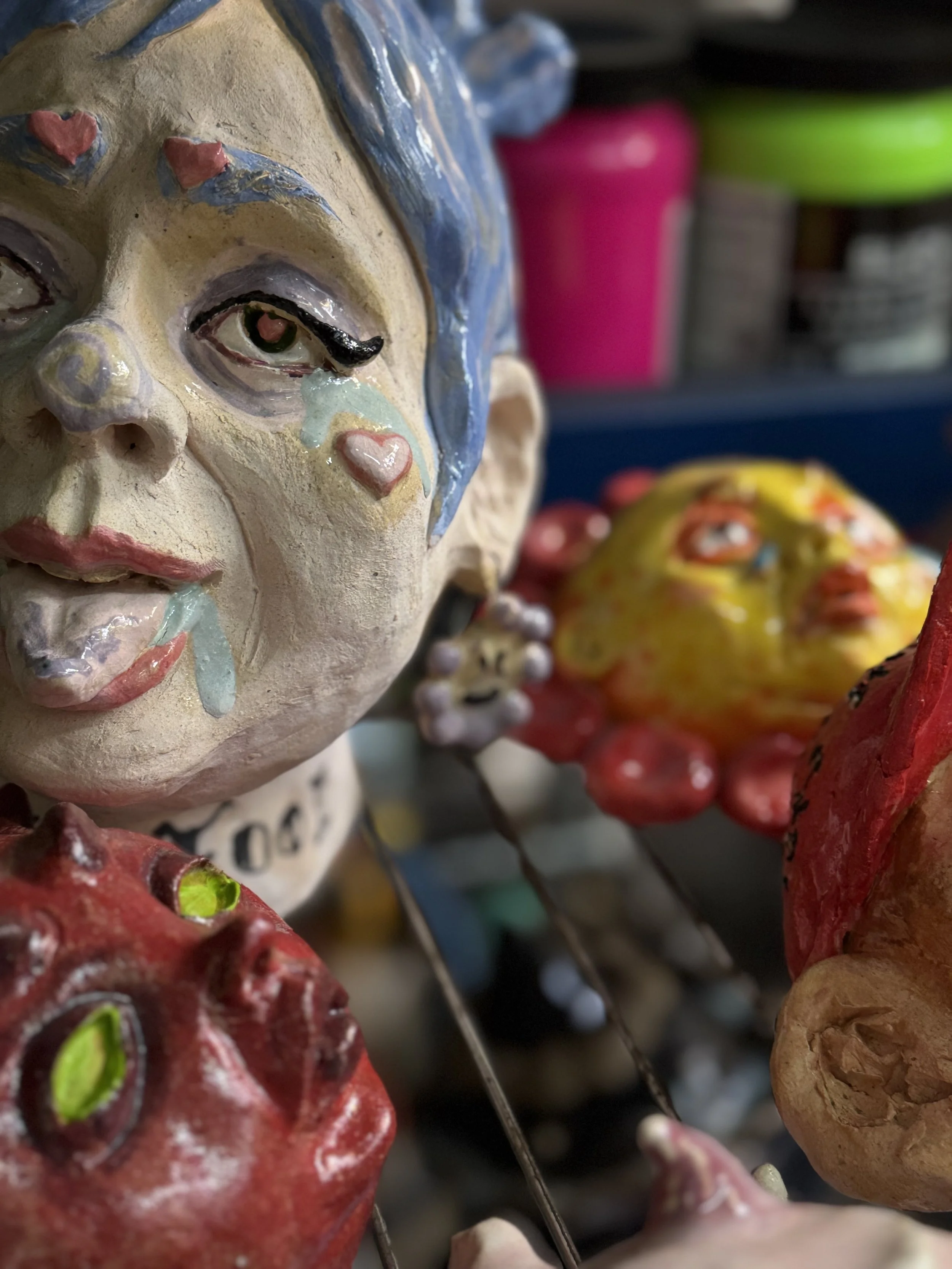
CG: Well, all of my work, even though you can't really tell it is identity work as a person who was born in El Paso, a border town, and raised partly in Juarez also a border town, and then brought over here. There’s a sentiment that you're not Mexican enough or you're not white enough or you're not this enough. You're not, and you're always in this limbo of in-betweenness. Art is the only way that I could say anything or I would want to say anything and blaring it out, this is me, this is what I have been through, and it’s what a lot of people have been through. This is what influences me. These are the visuals that I keep repeating.
I just wanted to build my own visual language of similar experiences, but uniquely my own.
I've had a lot of people come up and look at my work and express that they completely relate to it. Being able to communicate and connect with people from all walks of life is a great feeling, and accomplishment. It is always nice to see that a diverse audience could connect with the work, even though it's very much an identity body work. People could see it as something that's full of emotion and can relate with that emotion.
JC: How would you identify the work that you're making? Are they clowns?
Are they just wild eccentric people? Then there’s a mold of a penis candle, that's also such a taboo, specifically sex, just to talk about sexuality or our human anatomy were so sensitized not to bring these subjects up, which it's something that we've always embraced showcasing in our Gallery.
If an artist brings a piece of work that’s well made and it's representative of their identity, and it's what they're identifying with and what they want to say, and it's not going to hurt anyone, we're going to support it. We might pressure parents to have those conversations with their kids, and that’s the educational component of visiting art galleries. How would you really explain your work?
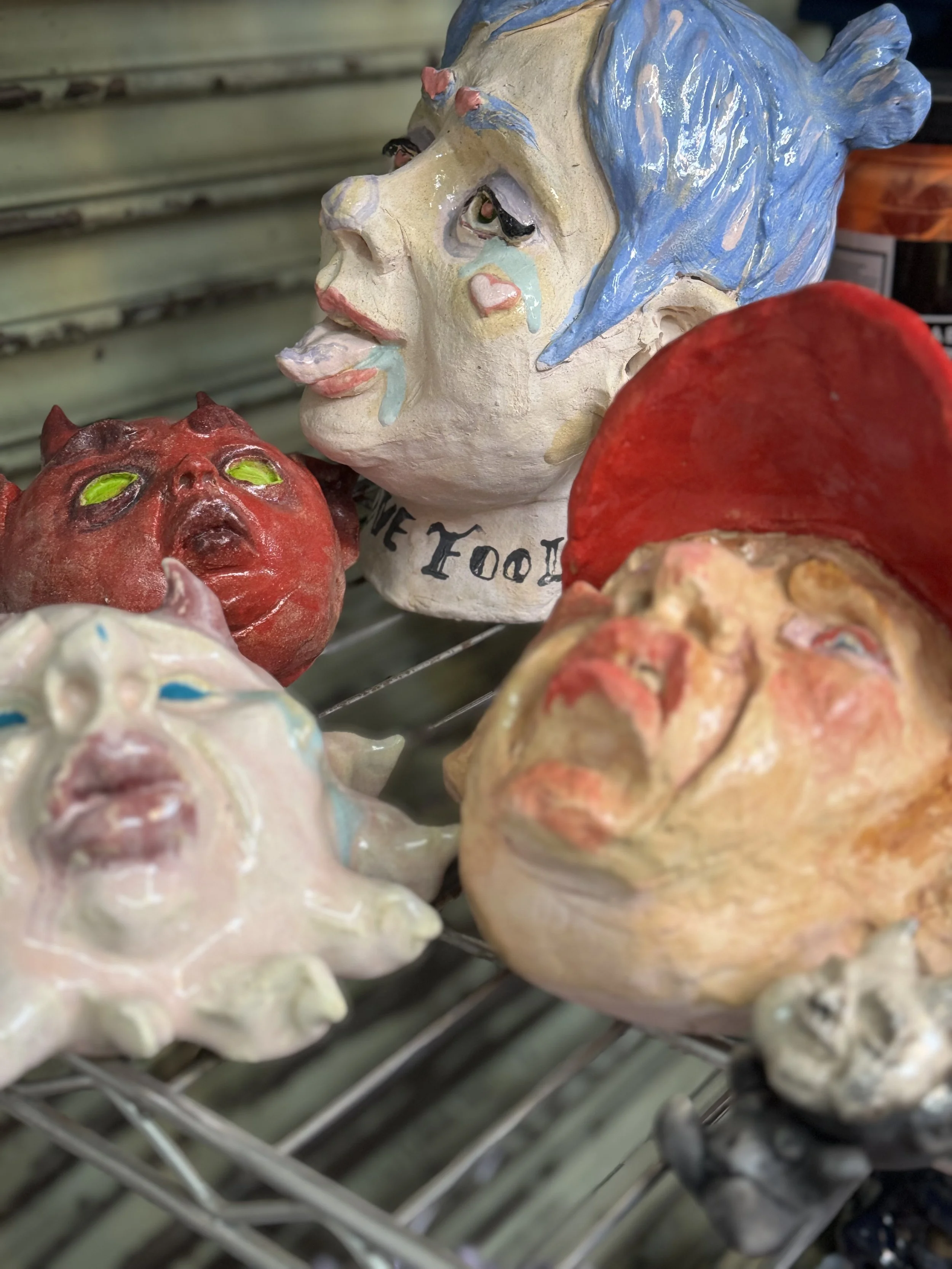
CG: I explain my work as adult themed, in a child's lens. I’ve had children at my school shows and they don't even notice most of the time that there are penises or other body parts until someone else points it out asking if it looks familiar. Innocence responds with the usual, oh.
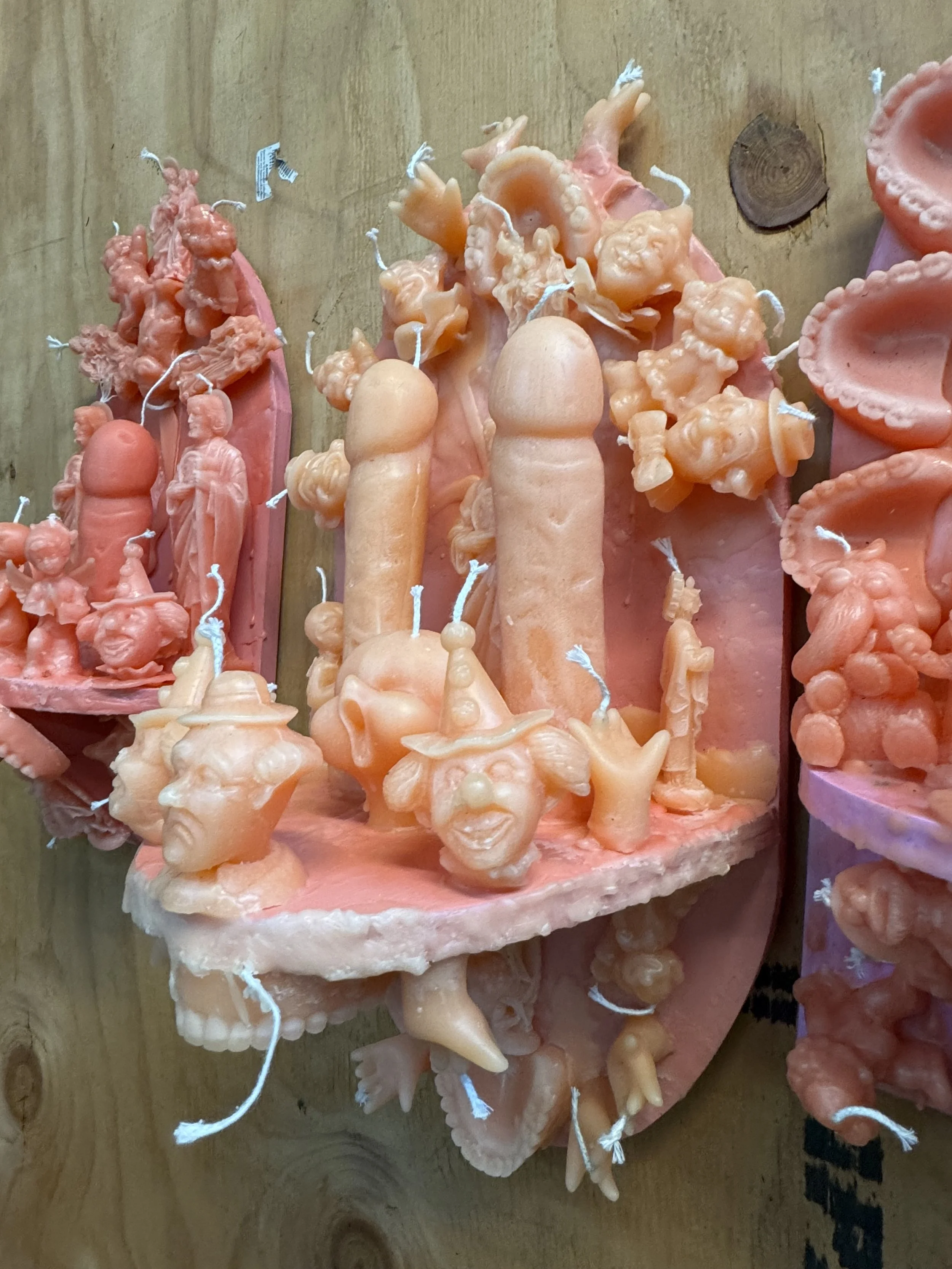
I've used these symbols, especially the phallus as a point of conversation, culturally in machismo, and culturally in what we hold valuable and what we don't. I grew up with four sisters and my mom kept trying for a boy, vocalizing how important it was to have a boy in the family.
Experiencing and seeing the differences and how sexes are treated and the responsibility that the female sex has, especially, the majority of single mothers, there are single moms who take on the blunt end of child rearing. It's a conversation not only about machismo, but also about penis envy and gender in general. What's the best way as a gender neutral person, to imagine what if, just what if, I did have a dick. As a person that lives with two boys, there’s this complete difference between how we were socialized, and what we care about. I could see it. It's not just about sex, it's about gender presentation, it's about, like I said, penis envy, it's about machismo. By only putting that image out, I could reach all these different topics.
The clowns, as a Mexican American, I have pictures of me in a clown's arms when I was three years old or younger. There's something in Latin America that has a very close connection to clowns. My connection with clowns comes from acknowledging that they’re putting on a show, they put on a mask and they're there with a purpose to entertain, which I completely relate to as a person that has to constantly transition roles, and suddenly I’m a teacher and that means I have to conduct myself a certain way. I can't be cussing all the time. I have to be more general about what I'm saying, and be concise. Before as a caregiver or babysitter and no longer being able to just randomly blurb out bad words because you're talking to a child. Understanding that it’s important to treat them as people, only recognizing they're not adults and comprehending that. It's these conversations that reflect the masks we wear and hide behind, and who we are in front of people.
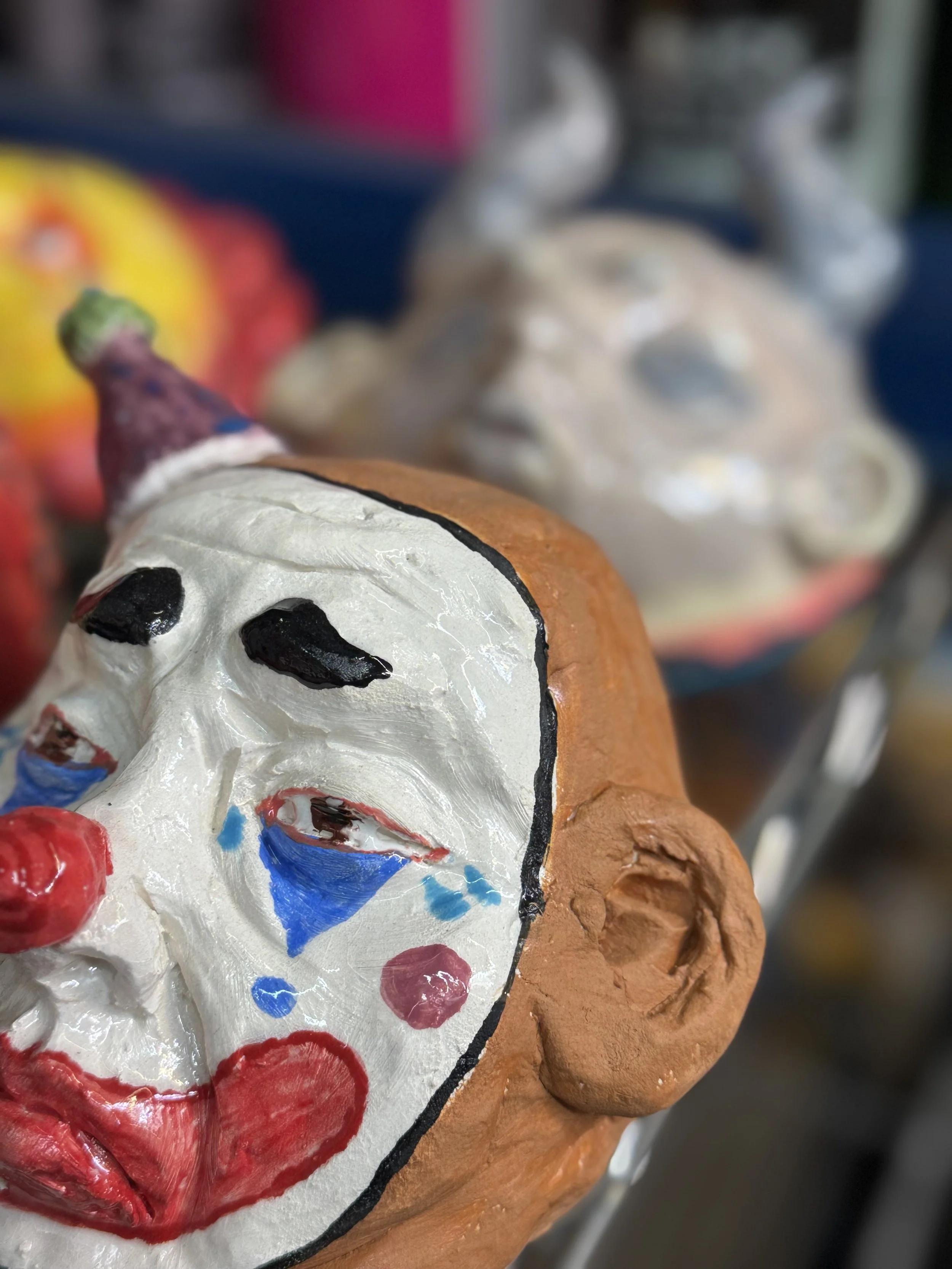
JC: Performers or performing is an interesting perspective. Whether it’s a clown in costume or being a teacher in the presence of a classroom filled with students, we have to put on a performance in our everyday lives. There's always so many things going on, the more you think about it, it could be a really difficult life sometimes. Some performers have the big stage and others are on the street, all making a living trying to survive. I can see how your artwork connects this concept allowing for individual perspectives, happiness or hardship or both are very real. It's also really fun and quirky.
CG: Yeah.
JC: You've been doing a lot of work. I still remember when we first met, one of the questions that really stuck was, how do I sell my work? From an outsider's perspective, you seemed to be really active showing a lot in galleries. Could you share how sales are going? Are you selling more? I hope we could sell a lot of your work for this upcoming show.
CG: When I started, there was work that I made for myself, and then there was work that I made to sell, and participated in events like First Friday, part of San Jose’s art walks downtown. You know how there was that Mayan scare where the world was going to end in 2012?
I think I started in 2013 because the world didn't end. I would make these random things that I thought would sell like chokers, necklaces, and earrings.
I would make small paintings, and then started to incorporate larger paintings every once in a while to test if they would sell. Working street markets could be very similar to flea markets, because you have people that will haggle you and have to explain what I’m selling is an original work of art. Why are you haggling with me?
It's like $60 bucks. Come on.
That was really hard, and I did that for 10 years. It took a mental toll doing the art walks, going to work and school. I’d wake up and do a whole eight hour class on a Friday and be vending until 11pm, if it was a weekend event I’d go to work and return to vending for the rest of the night on Saturdays. I had to figure out if that's what I wanted to do or if I wanted to be more focused on making work that was meaningful and not just knickknacks.
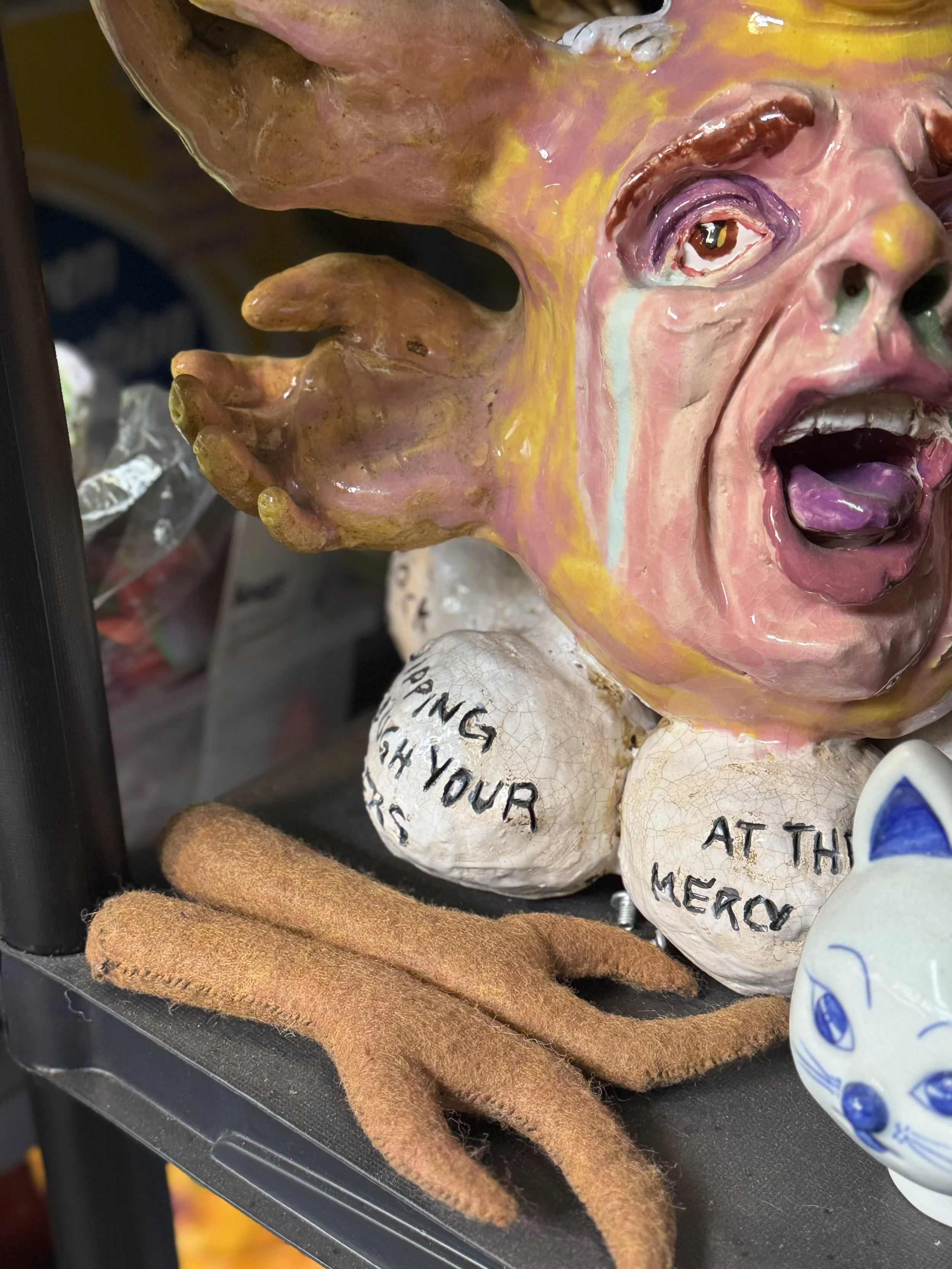
Teaching, the first thing I teach is the wheel, and as a person that loves to sculpt, the wheel is something that you could use as a tool to make a lot of things that could be profitable by selling.
However, as a person that doesn't want to do art markets anymore, I'm sitting on a collection of cups. I'm revamping my website to have an online market space because I keep making work.
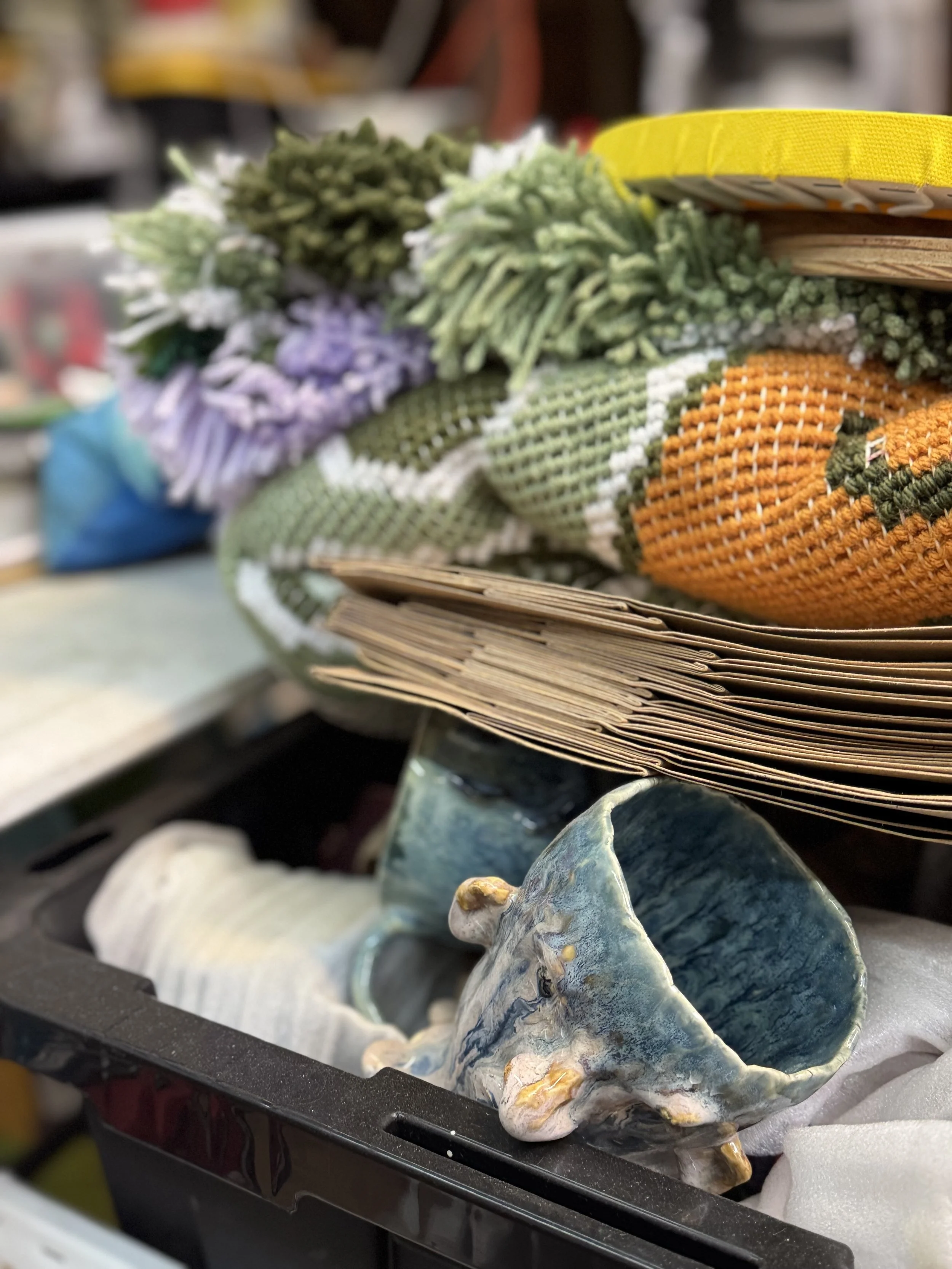
I'm hoping to learn how to navigate being more than just one thing and combining both a serious artist with an MFA and crafter that likes to make random things. Like making a magnet because I feel like it, and finding a way to merge the two. I attempted to do that in my MFA thesis show. I had a body of work that all had different meanings about childhood, parenthood, and were separated. Right when you came into the gallery there was a tent that had stuff that I made to sell like jewelry, and smaller prints.
It was very hard describing this in my thesis and narrowing myself to one practice because I'm both a fine artist and crafter. I had someone from Mexico City visit the show who expressed feeling like they were in Mexico because when you walked in there was an essence of someone slinging their wares, and that's exactly what I was doing. That’s a real quality and unique scene you see everywhere in Mexico. I could see people from other cultures doing that, and figuring out they can go and sell their stuff at a flea market and that's a big part of me.
JC: I’m right there with you, a lot of times people unknowingly silo artists into one thing. I myself as an artist have those moments with owning and curating a gallery space that specializes in murals, producing events and a public art festival. There’s so much we want to expand on but solely due to resources and limitations that we’ve had to navigate strategically what's accessible and feasible at the moment and making something out of nothing the essential DIY.
Artists that live and breathe art, are jumping around mediums, some days it could be watercolor or sculptures. Do you ever feel that you’re being siloed into one genre of art making, like ceramics, and how’s that working out?
CG: That's a good question.
I feel that no matter what, even though I went to school for sculpture, nothing's going to stop me from wanting to learn something else. I realize and understand because I do have the education and I have learned that having pattern recognition gets people known for a certain thing. For example Kaws is known for his figures, and other artists are known for a specific body of work.
I understand that if I want to reach more people, I will need to do the same thing over and over. But as a person that doesn't like doing that, I also know that nothing's going to stop me from learning how to make candles or learning how to carve soap or explore a different medium to communicate what I'm trying to say.
JC: Yeah! It's interesting you mentioned Kaws, because he's known for all his remakes. Hearing the name, I never go to the sculptures. I always go back to the graffiti magazines. He was present at the beginning of my graffiti days, besides all the European writers, and he had such a simplicity to shaping a letter by giving it a little notch that shaped his identity as someone who made great letters. I recently read an article that criticized Kaws and accused him of making art for tech bros. My immediate thought was the unplanned encounter I had with Aaron De La Cruz at the show. (laughing) and we're both artists. Personally I don't use any tech software in my art making, I literally only send emails in my defense (laughing continued). The irony that someone could take risks by doing graffiti vandalism and be judged years later, it's hard to fathom. I guess the lesson here is that at some point success will just drive people to have an opinion about your work and intentions. I’m glad you mentioned it because I've been struggling with that article and seeing who was supporting it by liking the post made me cringe. Anyway, nice interview intermission.
This being your first solo show coming up in March 2026, how do you feel? What are some of the things we could expect to see? Is there something you would like to express through this exhibition?
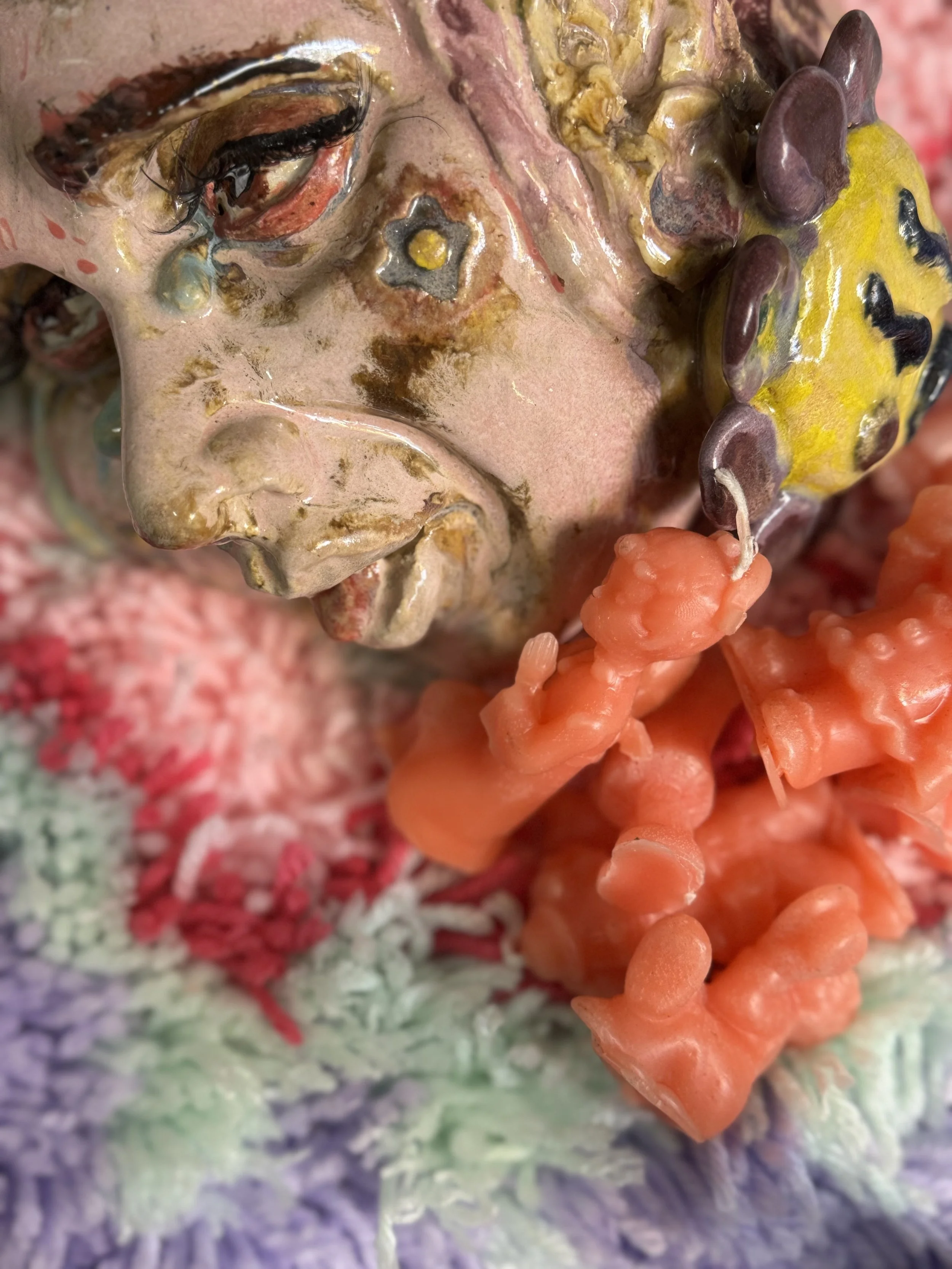
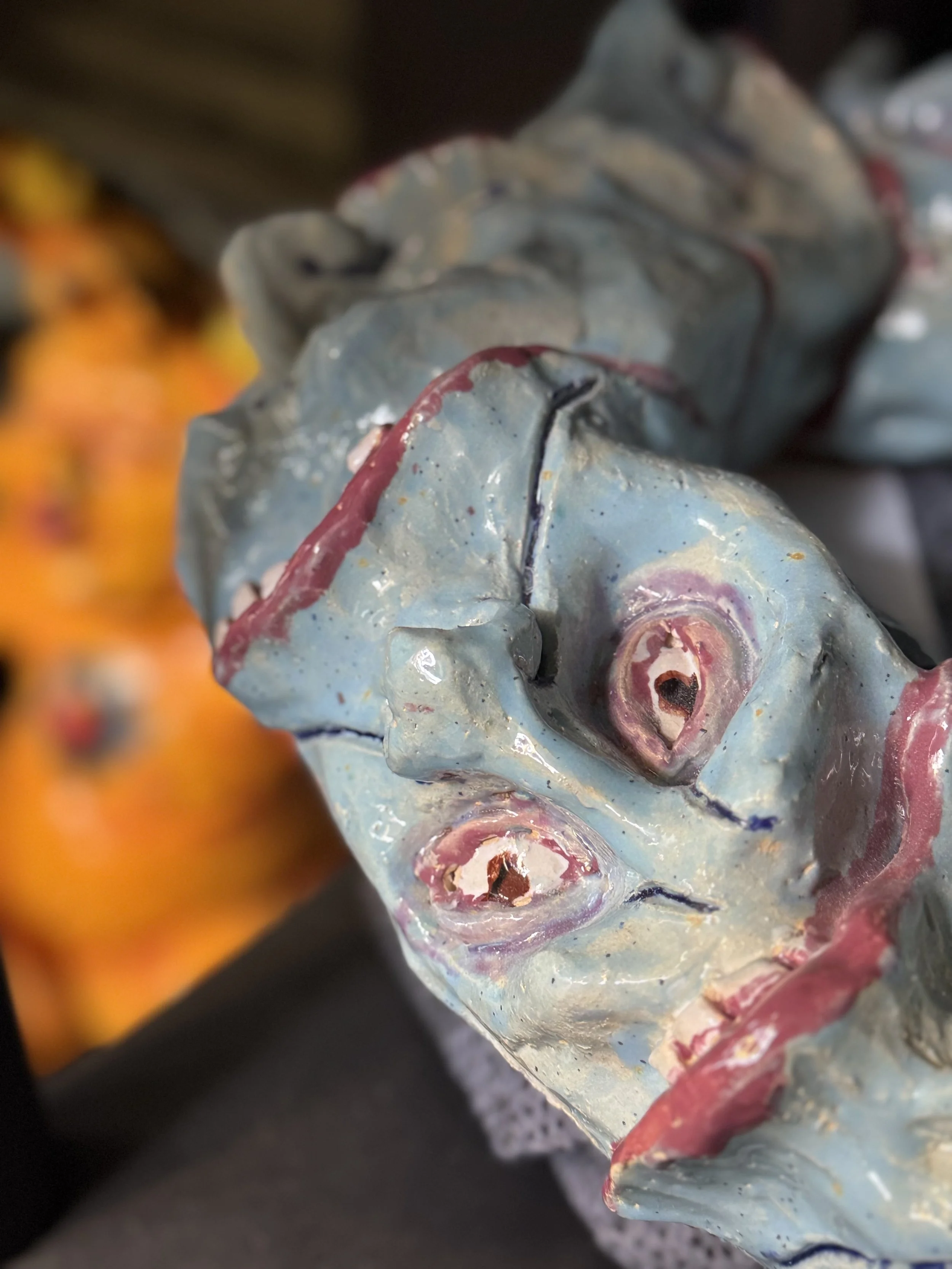
CG: I think I want to continue the conversation that I keep having through my artwork that you can't really put someone in a hole. I really enjoy the feeling of creating works on paper, canvas, ceramics, or bronze, and having my work recognized as mine by looking at them and identifying them as that's definitely something Cynthia made. I want to introduce myself to a broader public. I don't like to be pigeon holed into a certain one thing. I've always been rubbed the wrong way a little whenever someone says you're a ceramicist. My immediate disagreement reacts like no, I'm more than that.
JC: You're an artist.
CG: Yeah! So, like as you were saying, there’s that, it's a huge part of my identity to be in many different areas. I want to show people that link; nostalgia, trauma, childhood and adulthood. All mixed into a visual representation of humor, sadness, and sometimes weird. That's what life is, and I want to regurgitate that through images. Surprising people in every type of way like, huh, I never thought of having a pigeon poo on you, you know?
JC: Poop, it happens.
CG: Yeah, and having it as a sculpture!
JC: Yeah.
CG: These are things that do happen, you know?
JC: Yeah, it literally happened to me in Vietnam.
I had just rented a scooter and the family business grandma witnessed the moment and she started laughing. She was kind enough to tell her daughter who translated that it was a sign of good luck. Considering that I was nervous about riding a scooter in Saigon, perfect timing to be blessed by bird poop.
You said you're originally from El Paso?
CG: Well, I was just born there for papers.
JC:
So you were made in Mexico?
CG: Yeah.
JC: Hey, right on, same here. (high five moment)
CG: Yeah.
JC: I was made in Mexico, and mom crossed the border with me. When did your family come to SJ? Let's tap into your life as an artist in San Jose?
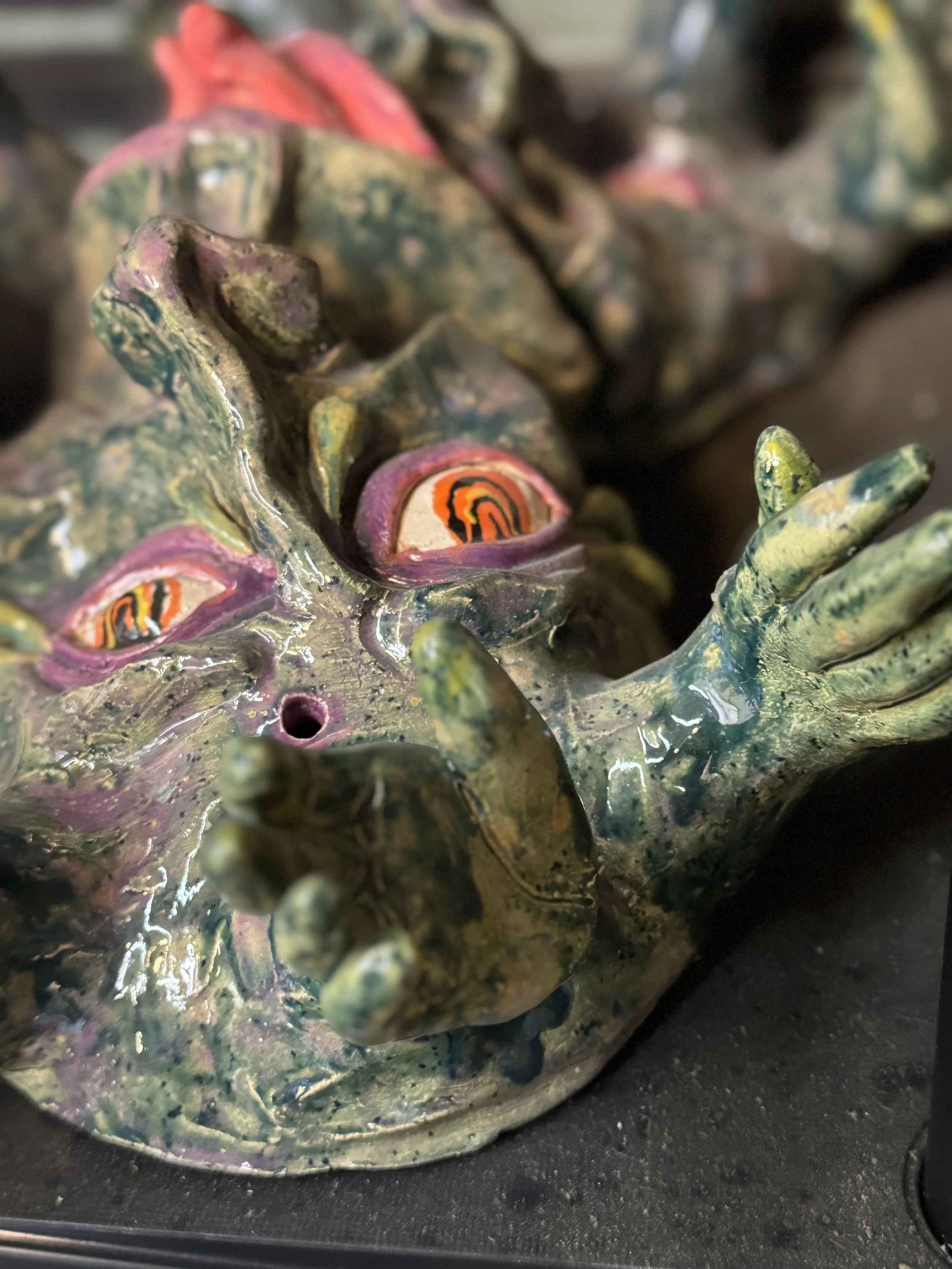
CG: I was brought over here when I was like four or five. I've spent most of my life here. I'm about to turn 40. I've been here forever but I carry a lot of Juarez with me. I would visit my grandmother often, and she lived there until she died. Many things that happened in border towns like Juarez, for example it was the murder capital of the world for a long time.
Carrying the fear of being a female living there which is always (sarcastically) fun, religious iconography because my grandma was very Catholic, the weird clown imagery because when you stop at the border and there's performers right there next to you and clownface blowing fire out of their mouth juggling and performing.
There’s a lot of visuals that stuck with me coming back and forth from visiting my grandmother. Once in San Jose, I was lucky enough to know that I wanted to be an artist at the age of fourteen when I decided this is what I want to do, and there were no ifs or butts about it.
In my teens I went out of my way to do teen art things. There was a teen arts center at the San Jose Museum of Art, there was a program at MACLA and I've been basically inserting myself into those spaces since I was a youth. At nineteen I had my kid, which paused my participation. As soon as I could at the age of twenty six I returned to school with a mission to pursue art until two years ago just trying to get those degrees, because I thought that's what you were supposed to do. I had already tried the avenue of doing the outsider artist thing, like vending and selling my art at events, and learned that's one way now I'm gonna try another way. I do want to say that, because of education it helped me understand the hierarchy in the art world a little bit better.
Learning what's the difference between an artist bio, an artist's statement, what exactly do you need for grant writing, knowing that there’s a possibility you're not going to be granted, and knowing where to look if you need funding. These were all helpful and there’s importance of understanding the institutional structure. I'm very appreciative that San Jose State is affordable comparatively speaking to most colleges. Community colleges here are amazing, literally going to community colleges for fifteen years just taking classes. I graduated with three AAs because I kept taking classes, not knowing what I was doing.
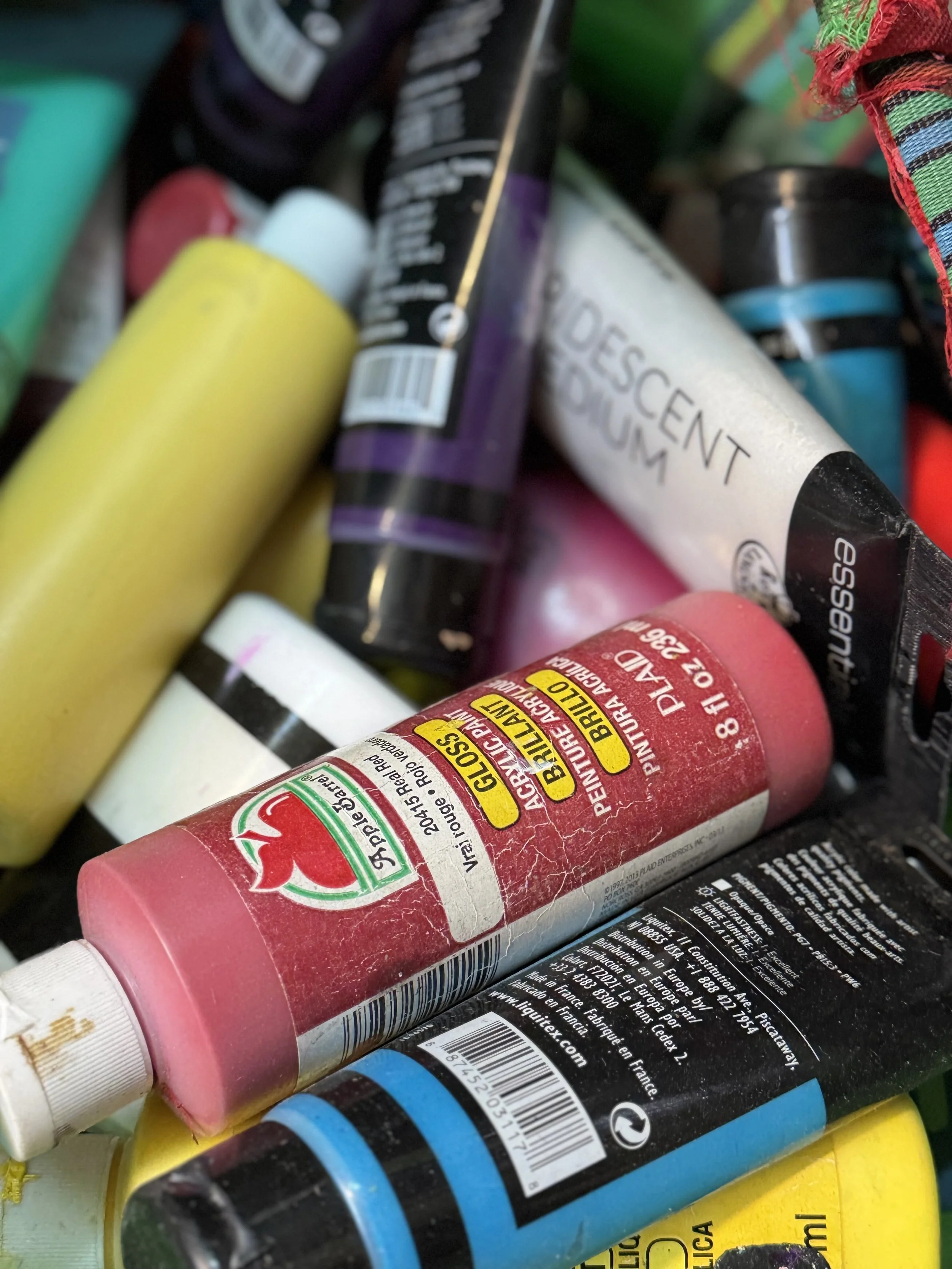
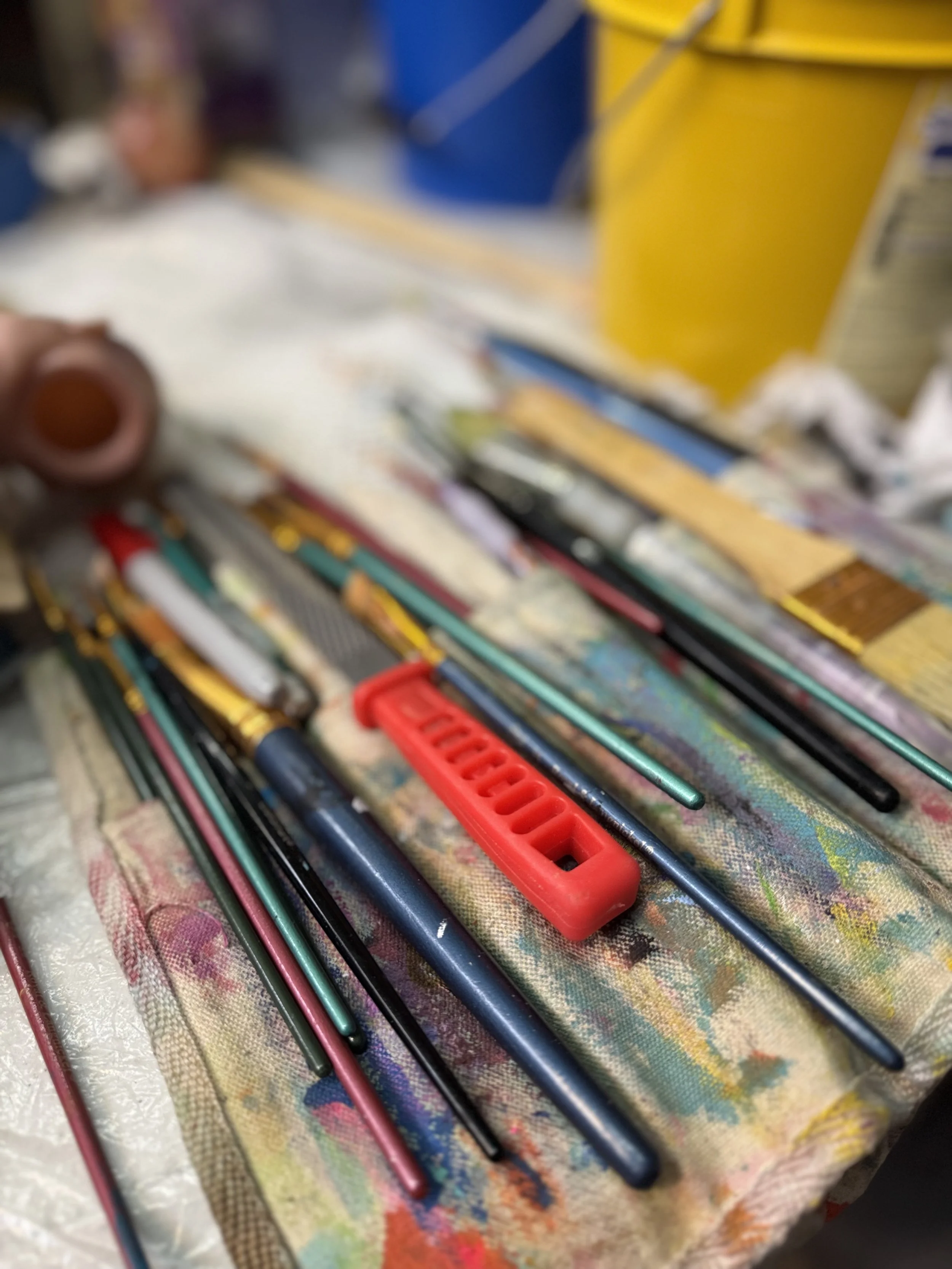
San Jose in particular is where I saw my first big murals, that weren't advertising for a panaderia because that's big in Juarez. This is a place that had a lot of murals that were Chicano, Mexican, like very brown pride and that resonated with me. I was a dancante for fifteen years too with different groups. That was another learning experience seeing the artisanal craftsmanship of dancers making their own (trajes) and they made all their regalia. I was learning so many things like leathercraft from making (chachallotes) or how to sew a little bit better because of making a 2D object in two a 3D object by making a headdress.
There was the concept of making things but also a lot of pride in it culturally. I adopted the mindset and had an example of what to emulate through those traditional elements, like colors and brightness of everything I was seeing, what you see in Mexican culture like the bright pinks, and really vivid yellows. I love all those colors, there's something that's very eye-catching, but then I also wanted to make it be part of my own story. I'm very happy being able to grow up here and to have experienced everything that I did.
There was a big community of dancantes, a big community of artists, and a big community of people that were trying to get kids off the streets to not get involved in gangs.
JC: What are some of the murals you had mentioned? I can remember the Sunset, Payless, and of course Chaparral mural on Santa Clara St.
CG: Those are the three biggest ones that I remember!
JC: Yeah, my mom used to love Chaparral, she would send us to buy the chorizo there.
CG: The same!
JC: Do you speak Spanish fluently?
CG: Yes, fluently it’s my first language, and english my second.
JC:
Me too.. and I had ESL classes.
CG: Same! (laughs all around)
JC: I imagine your household was mainly Spanish speaking with the exception of your siblings?
CG: Yes, both my parents, my mom will refuse to speak English, and says she doesn't know it, but she does. Most of the time, I’ll speak to both of my parents in Spanish. We still have a good amount of family on my dad's side in Aguas Clientes, and we're trying to visit them more because I don't want to lose that. The feeling of losing a big part of my identity and who I was when my grandmother died because she was the closest thing I had, and I'm trying to regain this connection with my Mexican relatives.
But yes, we had very similar upbringings. It was the Chapparal and it was Payless murals. That's where I lived, right off of King and Story, and Story and Mclaughlin for a while, and that's where I went to Emma Prusch Park to practice Dansa for years.
All these places were very close to me, where art is just something that people could see and experience for free. Growing up, I thought that galleries and museums were for people that had money, or specifically for elite types. It wasn’t until MACLA said no, you could go to these places for free if you joined. In 2003 they had a free program for a few years at the Museum of Art. Before that it was murals in the neighborhoods and culturally relevant things.
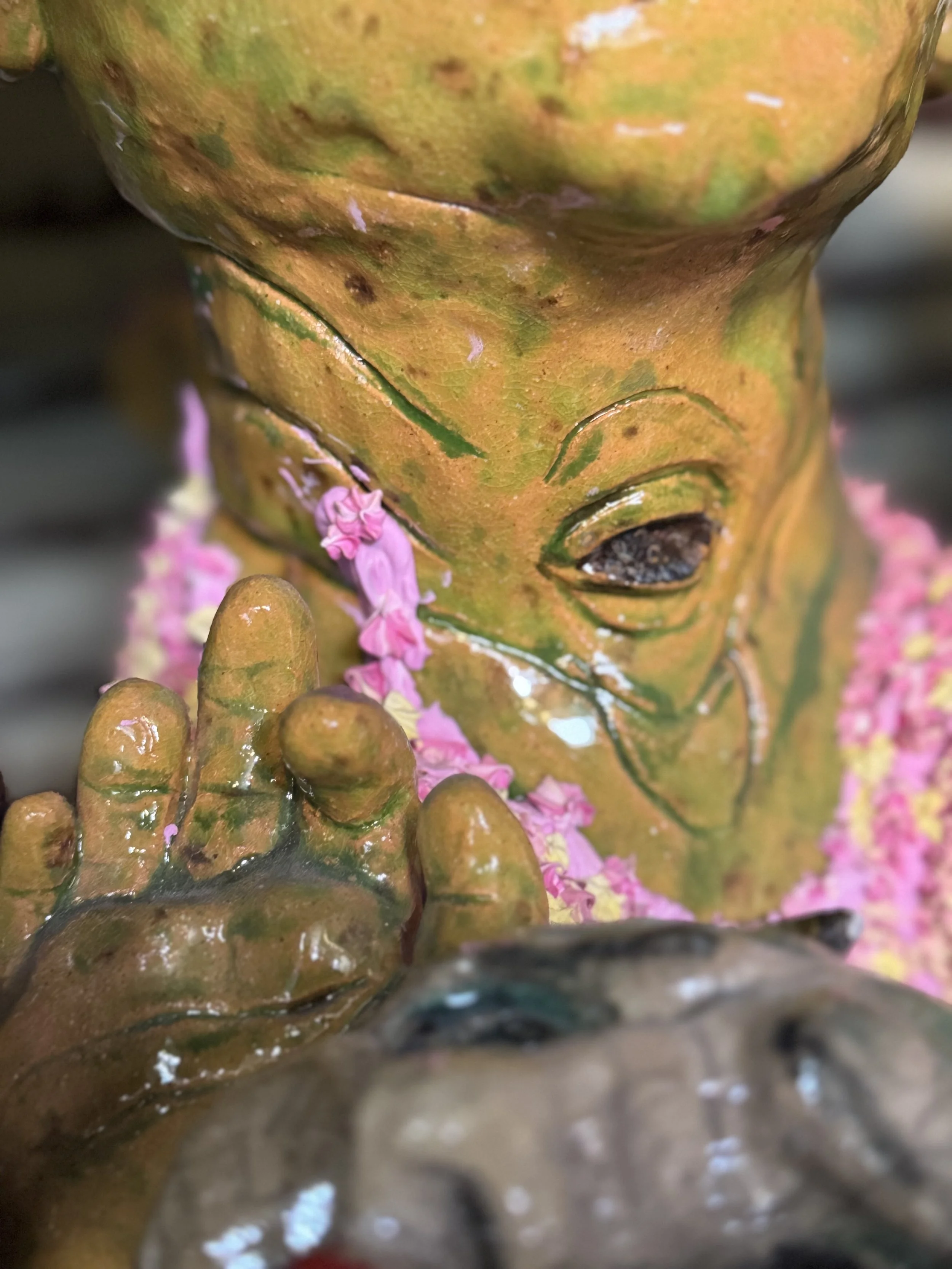
JC: Right, like the dansa.
CG: Like the dansa or the religious art, oh, religious art.
JC: You' talking about the Virgin Mary poster? (laughs all around)
CG:
I'm talking about the Virgin Mary, everything. There were the calendars, the framed white Jesus in every household, the angels that were crossing the little kids on the bridge.
All the Catholic imagery that is in every Mexican household.
JC: Definitely my household growing up, even the Aztec warrior calendars that were everywhere. Let’s get back to San Jose, and where do you see yourself in the future? You seem to be an artist who will go way beyond San Jose, and I truly hope that’s the case. Is it a goal for you to show around the country or around the world, maybe in Mexico? Is that something that maybe you have thought about?
CG: I would love that! I've been swimming against the current, and it's very hard. I love San Jose because I've lived here most of my life, but there’s only what, 6-7 galleries? When people think of art, they gravitate to SF and Oakland. I had a curatorial fellowship last year, and had an opportunity to observe through art nonprofit organization meetups, where people like Joe Miller from Works Gallery shared how it's just been these few avenues since the 80s. It's heart-wrenching because there’s such a huge artist community here, and no platforms for artists to get a step up or any type of recognition beyond. I just recently started showing my work on the first Thursdays in San Francisco, and that’s a difficult task to deliver artwork, and attend the events. I wish that there were more places here where you could have communication, and have a larger network of galleries.
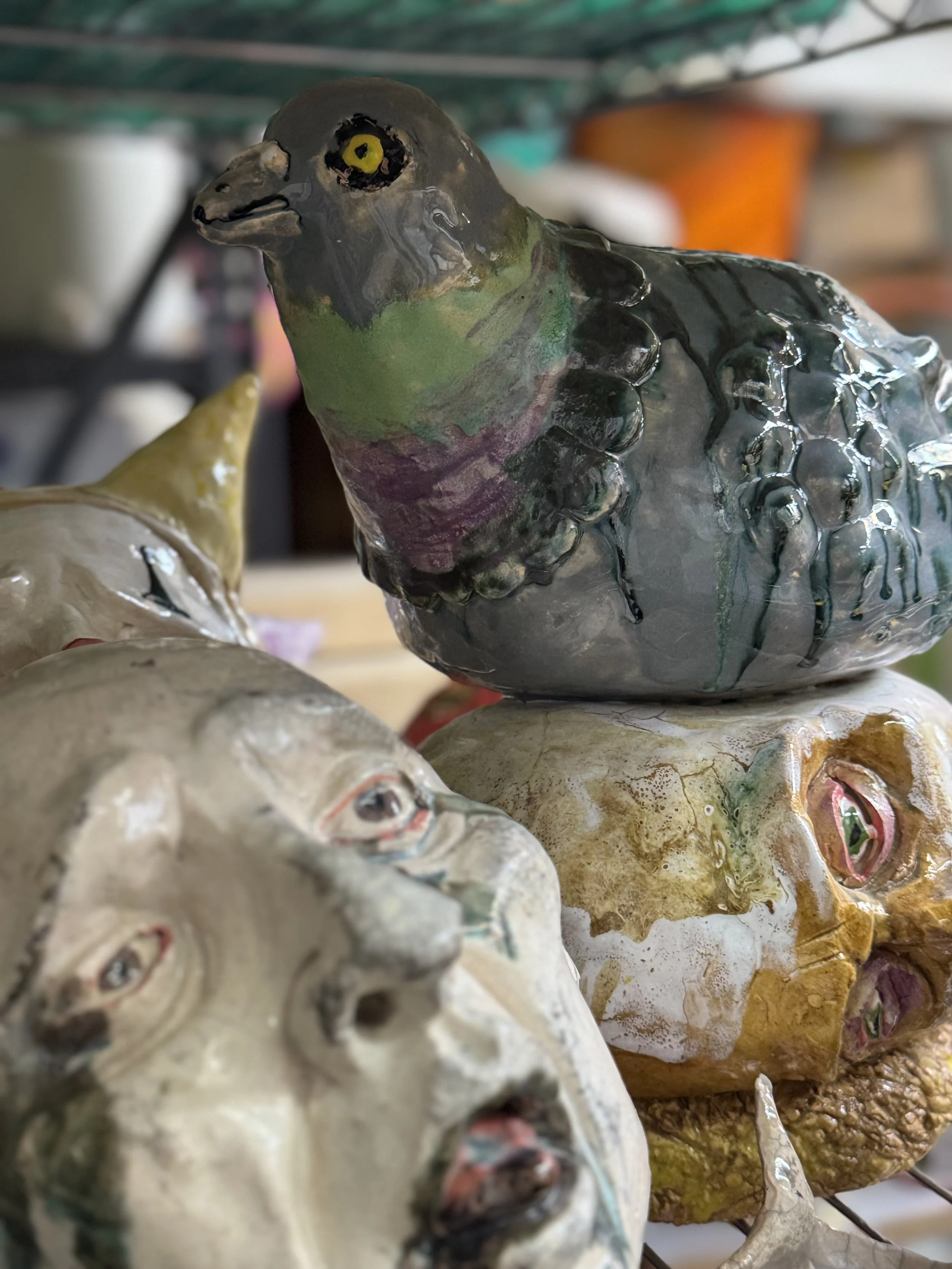
JC: I think in most cases, artists are proud of the work that we do. I’ve felt the lack of confidence from other entities because we’re now competitors, and rather than building a unified community there’s an unspokenness that leads or allows for IP to be easily appropriated, or disregarded when we work really hard to be as original as possible. It’s also such a small city and at the end of the day, curating unique new things is constantly a challenge and exhausting because other organizations will be inspired by the ideas and reshape them in their own way that could sometimes be a disservice to an authentic and genuine expression for better art experiences. It’s easier to be ignored, than to be recognized for doing great things. But there's a large group of people, and artists that express and understand what we do as an independent for profit art gallery and that will always continue to inspire us to be true to ourselves. Ironically it has motivated us to tough it out, and have a F! You mentality to succeed regardless of the obstacles. It’s very punk, and DIY, and we love having a space that creates opportunities for artists to be themselves. Final words, maybe walk us through and what you're envisioning for the show, are we going to see a variety of works?
CG: Yes! There's things that I always make that continuously pop up. There will be clowns, frogs, and teeth.
You'll see a lot of that, there's also worms. I was going out of my mind as play on words. “Out of My Mind”, is the title of the show. This exhibition will be a bit of everything that I stick my fingers in, displayed all in one place, as much as we could fit in. We are going to be seeing sculptures hanging on the walls. I’m definitely an anti pedestal person, thanks to and shout out Shannon Wright, who teaches sculpture at San Jose State.
Someone who’s against podiums and teaches that we should think of a sculpture as the thing. Do not think of it as something that's going to sit on something else. From that moment it pushed me to think harder about how I am going to put this thing by itself somewhere?